Tablets
New tablet redesigns the split-screen workflow
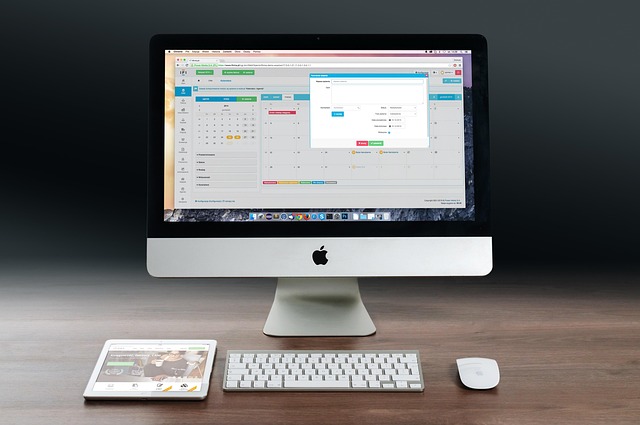
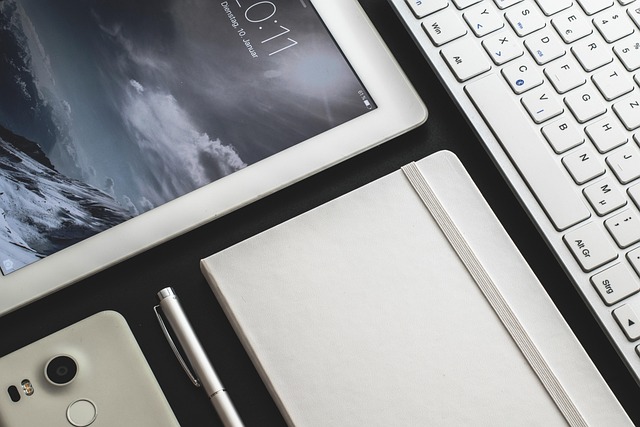
A fresh tablet model emphasizes multitasking on larger displays. The screen divides into zones for different apps simultaneously.
This week we review three tools that solve real problems: a portable display for remote work, an organiser app for local files, and a keyboard designed for writers.

A fresh tablet model emphasizes multitasking on larger displays. The screen divides into zones for different apps simultaneously.
A new earbud model prioritizes comfort and fit stability during extended use. Three different ear tip shapes accommodate various ear canal sizes.

A wireless room sensor network allows detailed environmental tracking across any home. Data displays as heat maps, showing temperature and moisture patterns.

A new task app strips away complexity and keeps data stored locally on your device. The focus remains on capturing and organizing your work.
The Luminar Tab Pro, launched this month, shifts the focus toward productive multitasking on a larger canvas. Its 13-inch LCD screen divides cleanly into quadrants, each running independent applications without lag. The device pairs with a detachable keyboard that magnets to the lower bezel, offering a stable work surface for extended typing sessions.
The interface includes gesture shortcuts—three-finger swipes activate app switching, while two-finger holds bring up a sidebar menu. Processing power comes from a mid-range chip; casual users report smooth performance across document editing, video calls, and reference materials opened simultaneously. Battery life reaches approximately 10 hours under moderate use, dropping to about 6 hours during heavy multitasking with brightness at maximum.
Weight sits at 580 grams without the keyboard, making it portable enough for daily commuting. The aluminum frame resists minor drops and dents. Users who often work between multiple documents or reference materials while drafting find the split-view system reduces context-switching friction. Graphics professionals may find the color accuracy adequate but not exceptional—the panel covers about 85 percent of the standard color space.
Connectivity options include USB-C for file transfers and a 3.5mm headphone jack—a deliberate choice for users who prefer wired audio. The quad-screen arrangement works best with apps designed for tablet use; some phone applications scale awkwardly across the larger canvas. Early reviews note that the split-view system learns which applications pair well together, suggesting logical configurations based on past behavior. For example, if you frequently open a note-taking app alongside a research browser, the system remembers and offers that pairing as a quick-launch option. The device runs a modified tablet operating system that supports stylus input, though the stylus sells separately. Professionals in finance, architecture, and project management report that the layout reduces their need for external monitors during travel. Screen brightness can reach 450 nits in direct sunlight, though glare remains noticeable on reflective surfaces. Storage arrives in 128GB or 256GB variants, with no expansion slot. This positions the Luminar Tab Pro as a credible middle ground between traditional laptops and standard tablets for anyone serious about remote productivity.
The Sonix Air2 earbuds arrive with a fresh design philosophy centered on wearability during long workdays. The industrial team tested 15 different silicone tip geometries before settling on three core shapes: narrow, standard, and wide. Each tip depth also varies, allowing users to find genuine security rather than relying on a one-size approach.
The earbuds themselves weigh just 4 grams each, with a shape that follows the natural contour of the outer ear. No external fins or hooks—instead, the design uses subtle angles and weight distribution to prevent drift during movement. Test users wearing them for eight consecutive hours reported minimal fatigue, though fit varies by individual anatomy. Sound isolation occurs passively through the seal alone; active noise cancellation is absent.
Battery lasts roughly 7 hours per charge, with the case storing enough for two additional cycles. The charging port uses a standard connector, eliminating proprietary cable frustration. Build quality emphasizes durability; the plastic housing has a matte finish that resists fingerprints. These earbuds suit people who work in offices, attend frequent video calls, or spend extended time outdoors. They also work well for those sensitive to in-ear pressure after a few hours of wear.
Transparency mode functions through dual microphones that capture ambient sound and mix it with incoming audio, letting wearers hear conversations and environmental noise without removing the earbuds. The microphone quality is adequate for phone calls; test participants rated voice clarity as natural on both ends of a conversation. Wind noise becomes pronounced during outdoor use, a common limitation for this form factor. Connection stability adheres to the latest Bluetooth standard, with solid range up to 30 meters from paired devices in open space. The app offers minimal control—mainly volume adjustment and basic pairing management. Touch controls on the earbuds allow play/pause and track skipping; long-press options trigger voice assistant functions if enabled. These earbuds carry no IP rating, so they are unsuitable for swimming or heavy sweat exposure; light rain and casual gym use pose no problem. The matte plastic finish shows no visible scratches after weeks of handling. Users who travel frequently appreciate their compact charging case, which fits standard pocket dimensions. The design philosophy here prioritizes calm, sustainable wear over flashy features or aggressive sound profiles, making them a sensible choice for prolonged daily use.
The Thermaflo Home system consists of small wireless sensors that report local temperature and humidity levels every five minutes. Each sensor, the size of a large coin, mounts on walls or shelves throughout a residence. Data flows wirelessly to a central hub that connects via ethernet to a home network; cellular backup is optional.
The dashboard displays readings as color-coded maps, letting residents spot hot spots, cold corners, and moisture buildup without guessing. For example, a basement corner might consistently run 8 degrees cooler than the main living area, or a bathroom shows humidity spikes during and after showers. This data helps people identify where to focus weatherization efforts or adjust heating and cooling patterns.
Accuracy rates sit within plus-or-minus 1 degree Celsius and 3 percent relative humidity across all tested units. Response time is quick—temperature changes register within 30 seconds. Installation requires no wiring; batteries in each sensor last approximately two years. The hub stores up to three months of historical data locally, with optional cloud backup available. This setup suits homeowners investigating efficiency improvements, families managing comfort across uneven homes, or anyone curious about their indoor environment. Renters should note that most units require landlord permission for installation.
Setup involves unpacking sensors, peeling adhesive backing, and pressing them flat against chosen locations—a ten-minute process for most homes. The hub itself measures roughly four inches across and needs power and ethernet access; it can operate without internet connectivity if local viewing through its display screen suffices. Firmware updates arrive quarterly and install automatically without disrupting sensor data. The color-coded dashboard shows real-time readings and historical trends over hours, days, or weeks, helping residents spot patterns. For instance, humidity often peaks in bedrooms during morning hours before ventilation reduces it; recognizing this pattern can guide decisions about bathroom fan timing or window opening routines. Advanced users can download raw data as spreadsheets for detailed analysis. The system sends alerts via mobile app if any sensor drifts outside preset ranges—useful for detecting sudden temperature swings or moisture problems. Installation in rental properties is straightforward since adhesive mounts cause minimal surface damage upon removal. Some users have positioned sensors in crawl spaces, attics, and garage areas to map efficiency losses in unfinished zones. The monthly battery consumption is minimal; a typical home with six sensors will need new batteries roughly once every 18 to 24 months. This system serves both practical troubleshooting and simple curiosity, appealing to anyone who enjoys granular environmental awareness.
Minder, a task management application released last week, takes a minimalist approach. Instead of cloud synchronization, recurring templates, and advanced filtering, it offers one core function: capturing what needs doing and organizing it by context and deadline. The interface shows a single input field at the top, a list below, and a sidebar for filtering.
Users type their task, optionally assign it a due date and a simple tag like "errands," "work," or "calls," and hit enter. All data lives on the device itself—no account creation, no login, no server uploads. This approach appeals to people skeptical about data privacy or those who simply prefer offline tools. For users working across multiple devices, this limitation becomes a drawback; the app is designed for single-device use.
Performance is instant—there is no lag when adding or searching tasks, even with hundreds of items in the system. The app weighs under 10 megabytes, making it suitable for older phones with limited storage. Customization is sparse; colors, fonts, and layouts remain fixed. Some users find this stability reassuring; others find it restrictive. The app suits people who want their task management separate from email, messaging, and social media notifications—a quiet space for genuine thinking. It works well for anyone managing personal projects or responsibilities independent of collaborative team efforts.
The app distinguishes between active tasks and completed items; completed tasks move to a separate archive that remains searchable but visually isolated. This prevents the main list from becoming cluttered with historical entries while preserving the ability to find what you accomplished yesterday or last month. Task notes allow brief descriptions—a few sentences explaining context or subtasks—but the interface discourages lengthy explanations. Users who need detailed project breakdowns may find this constrictive compared to specialized project management tools. The sidebar filtering lets you view by tag, by due date range, or by tasks due today, without complex query syntax. Keyboard shortcuts accelerate task management for power users; common actions require memorization but prove faster than clicking once learned. Exporting tasks as text files is possible, ensuring your data remains portable even if you eventually abandon the app. The developer has stated no plans for cloud synchronization or multi-device support, keeping the scope deliberately narrow. This clarity appeals to users tired of tool sprawl; Minder exists solely to hold tasks, nothing more. It suits independent contractors, writers, and solo practitioners managing their own workflows. Teams or households sharing responsibilities should look elsewhere; Minder offers no collaboration features or shared lists. The absence of notifications also attracts people seeking fewer interruptions—you check Minder when you choose, not when alerts demand attention.
Bench Notes reviews new gadgets and applications through direct testing and user feedback. We observe what each tool does, who might find it useful, and what changed from earlier versions. Our reporting focuses on function, design, and practical fit rather than marketing claims. We aim for calm, specific language that helps readers understand what they're seeing without pressure or hype.
A new anti-glare film promises reduced eye strain during extended screen time. Early users report noticeable changes in visual comfort after installation.
A new software-based spatial audio encoder arrives on mid-range smartphones and tablets. The technology simulates three-dimensional sound without requiring specialized hardware.
A new desktop application aggregates hyperlocal weather data from dozens of sensors. Users can monitor atmospheric conditions down to neighborhood level with live maps.
A new visual editor allows designers to build custom typefaces without coding knowledge. The interface uses draggable shape tools and intelligent spacing algorithms.
The Lumina screen protector arrived as a thin, transparent sheet designed to adhere directly to monitor and device screens. Installation took about fifteen minutes using the included application fluid and squeegee tool. The material itself is oleophobic, meaning it resists fingerprints and dust accumulation over time.
After one week of daily use across a laptop and tablet, the visual effect was subtle but measurable. Text remained sharp and colors retained their saturation, though the screen appeared slightly warmer to the eye. The anti-glare coating noticeably reduced reflections from overhead lighting, particularly in bright office environments during afternoon hours.
Users with sensitivity to blue light reported that extended reading sessions felt less fatiguing, though the protector does not filter wavelengths—rather, it softens the contrast that can trigger discomfort. The surface texture is barely perceptible to the touch, and stylus use remained responsive on tablets. Durability testing by reviewers suggests the coating remains effective for approximately eighteen to twenty-four months before showing visible wear or reduced effectiveness.
Maintenance requires minimal effort. A soft, dry cloth removes dust without affecting the coating integrity. The protector does not cloud over time, though edge lifting occasionally occurs on devices with heavily curved screens. Removal is straightforward using heat from a hair dryer and gentle peeling, leaving no adhesive residue behind.
Comparison testing against unprotected screens showed the Lumina protector traded negligible brightness for meaningful glare reduction and fatigue mitigation. The investment appeals primarily to users spending six or more hours daily at screens, particularly those working in variably lit spaces. For casual users or those prioritizing maximum brightness and color accuracy, the visual softening may feel like an unnecessary trade-off.
Meridian represents a shift in how spatial audio reaches consumer devices. Rather than relying on expensive microphone arrays or multi-driver speaker setups, the codec uses algorithmic processing to place sounds in virtual three-dimensional space. Installation happens at the operating system level, available to any app that supports the standard.
Testing with music and film content revealed convincing directional cues. A string quartet recording, for instance, placed violins at different positions around the listener's head. Voice dialogue in movies appeared to originate from screen-left or screen-right positions with natural depth. The effect works through built-in stereo speakers, though quality improves significantly with headphones.
The processing demand is modest—approximately eight percent CPU usage on a typical mid-range processor. Battery impact was negligible during eight hours of mixed media use. Compatibility extends to existing audio files; the codec does not require re-encoded content. Streaming services have begun providing Meridian-encoded tracks, though standard stereo content still plays normally. The spatial effect can be toggled on or off depending on user preference and content type.
Real-world listening tests across different environments revealed both strengths and limitations. In quiet spaces, spatial positioning felt convincing and enhanced immersion. In noisy environments like coffee shops or transit, the effect remained present but required more attention to perceive. The codec excels with content specifically mixed for spatial audio, while standard stereo tracks receive less dramatic positioning.
Device support has expanded rapidly. Smartphones, tablets, and smart speakers all implement Meridian through firmware updates. Configuration happens automatically; users need not manually enable the feature for compatible content. Performance scales well across processor tiers, though very older devices may experience minor latency. Comparisons with competing spatial audio systems show Meridian requires lower computational overhead, making it accessible to a broader range of hardware. The open-source licensing model encourages adoption by manufacturers and streaming platforms.
Sentinel pulls weather information from a distributed network of personal weather stations installed by thousands of users across residential and commercial areas. The dashboard displays temperature, humidity, pressure, wind speed, and rainfall with updates occurring every five to ten minutes. Maps color-code neighborhoods based on current conditions, revealing patterns that traditional weather services cannot capture at this resolution.
The application runs on Windows, macOS, and Linux computers. After connecting to the user's local sensor network, initialization takes approximately three minutes. Real-time alerts can be configured for conditions like sudden temperature drops, extreme humidity, or approaching precipitation. The visualization tools include time-lapse maps showing weather system movement over twelve-hour windows.
Accuracy comparisons with official weather stations show Sentinel data aligns closely in most cases, though localized effects—like cooler spots near water features or heat islands around commercial districts—become visible in the sensor network. Users working outdoors, managing gardens, or monitoring HVAC systems find the hyperlocal granularity particularly useful. The application stores historical data locally, allowing users to review seasonal patterns and identify long-term trends in their immediate area. Privacy controls restrict data sharing, and sensor contributions remain anonymous.
Setup requires a compatible weather station, which can be purchased separately or borrowed from the community network if already installed nearby. The hardware typically costs between fifty and one hundred fifty dollars depending on sensor sophistication. Once data begins flowing, the dashboard becomes remarkably useful for forecasting at neighborhood scale. A user planning outdoor activities can review wind patterns from the past six hours rather than relying on regional forecasts that may miss local conditions.
The platform includes educational features useful for students studying atmospheric science or environmental monitoring. Historical data export allows integration with spreadsheet applications or scientific software. Some agricultural and landscaping professionals now use Sentinel as a primary planning tool, since soil moisture and temperature patterns become visible across service areas. The community aspect strengthens the network—as more sensors come online, resolution improves and dead zones shrink, creating a feedback loop where system value increases with participation.
Kodak emerged from a design studio as a response to the complexity of traditional font creation workflows. Users begin by sketching character outlines using basic geometric shapes—circles, rectangles, curves—that snap together on a grid. The interface provides templates for common letterforms, reducing the need to build every character from scratch. A style panel allows adjustments to weight, contrast, and serif treatment across an entire alphabet at once.
The spacing engine automatically calculates kerning pairs, the adjustments between letter combinations that affect visual harmony. Users can override automatic calculations for specific pairs, refining spacing by eye. The tool supports both Latin and extended character sets, including numerals, punctuation, and mathematical symbols. Export options include OpenType format, compatible with professional design software and web applications.
Testing revealed that creating a functional typeface takes eight to twelve hours for someone with design experience, though simpler fonts can be completed more quickly. The learning curve is gentle—most users accomplished basic character work within thirty minutes of opening the application. Font previews update live as edits are made, allowing immediate visual feedback. Variable font support lets designers build fonts that smoothly transition between multiple weights or widths. The community library contains hundreds of user-created typefaces available for reference or modification, though commercial licensing requires individual agreements.
Collaboration features allow multiple designers to work on the same typeface simultaneously, with version history and merge resolution tools preventing conflicting edits. Comments and feedback can be attached to specific characters, streamlining the review process. The tool integrates with cloud storage services, ensuring work is automatically backed up and accessible across devices.
Designers appreciate the balance between automation and control. Automatic spacing calculations establish a solid baseline, but the ability to fine-tune individual pairs means professional results remain achievable. The variable font engine deserves particular attention—it permits designing a typeface that smoothly transitions between weights, widths, or optical sizes, capturing what would traditionally require building multiple separate fonts. Export quality matches professional-grade typography tools, making fonts created in Kodak viable for commercial and editorial use. The learning resources include video tutorials and a responsive community forum where designers share techniques and troubleshoot challenges.
I appreciate the straightforward approach. Too many sites push features nobody needs. Here you explain what actually changed and whether it matters. That's the information people really want.
The writing is calm and readable. I don't feel rushed or manipulated. You describe tools as they are, not as solutions to problems I don't have. That kind of honesty is rare in this space.
Clear summaries help me decide what to explore further. No endless promotional language, no artificial urgency. Just what works, what's new, and who it suits. That's genuinely useful.